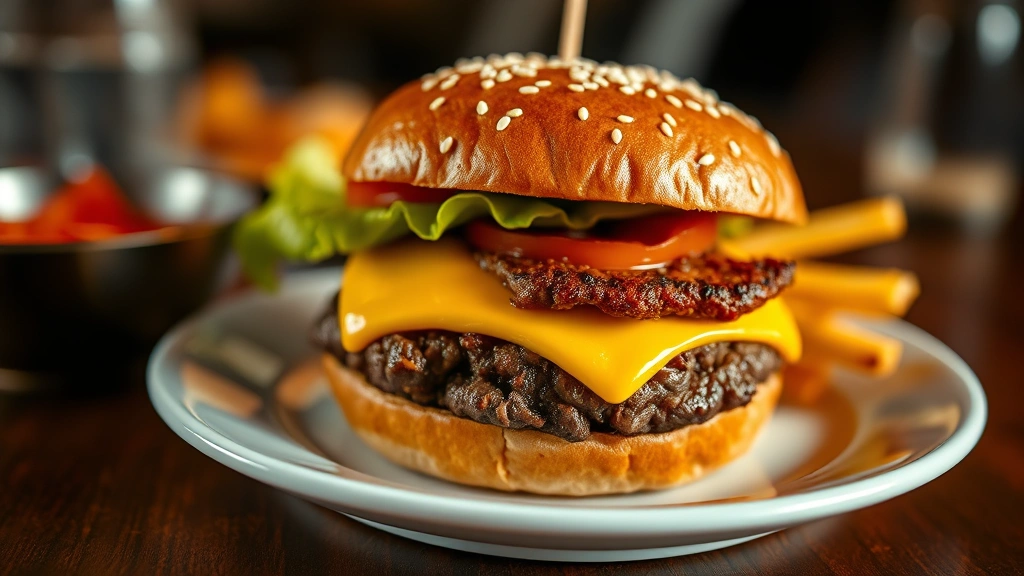
McDouble Nutrition Facts: Dietitian Explains
The McDonald’s McDouble has been a menu staple for decades, offering an affordable, convenient meal option for millions worldwide. However, understanding its nutritional profile is essential for anyone making informed dietary choices. As a registered dietitian, I’ve analyzed countless fast-food items, and the McDouble presents an interesting case study in how portion sizes, macronutrient ratios, and processing impact daily nutritional intake.
This comprehensive guide breaks down every nutritional component of the McDouble, examines how it fits into various dietary patterns, and provides practical context for consumers navigating fast-food nutrition. Whether you’re an occasional fast-food consumer or someone trying to optimize your healthy nutrition plan, understanding what you’re consuming matters.
Complete Nutritional Breakdown
The McDonald’s McDouble contains the following nutritional information per sandwich (approximately 215 grams):
- Calories: 400-450 (varies by region)
- Total Fat: 20-22 grams
- Saturated Fat: 9-10 grams
- Trans Fat: 0.5-1 gram
- Cholesterol: 80-90 milligrams
- Sodium: 900-950 milligrams
- Total Carbohydrates: 33-35 grams
- Dietary Fiber: 1-2 grams
- Sugars: 6-8 grams
- Protein: 22-25 grams
These figures represent what you’re consuming when you order a McDouble as a standalone item. It’s worth noting that most people consume the McDouble as part of a meal combo that includes fries and a beverage, which significantly increases overall caloric and sodium intake. Understanding the base nutritional content helps you make strategic decisions about what to pair with your burger.
Macronutrient Analysis
From a macronutrient perspective, the McDouble presents a moderately balanced profile, though with some notable considerations for dietary optimization.
Protein Content: With 22-25 grams of protein, the McDouble provides a meaningful protein contribution. This is approximately 44-50% of the recommended daily intake for an average adult (50 grams). The protein comes primarily from the beef patties and contributes to satiety, which can help prevent overeating later in the day. However, this protein comes with significant amounts of saturated fat, unlike leaner protein sources.
Fat Profile: The McDouble derives approximately 50% of its calories from fat. While fat is an essential macronutrient, the composition matters. Saturated fat comprises roughly 45% of total fat content, which exceeds the American Heart Association’s recommendation that saturated fat constitute no more than 5-6% of daily calories. For a 2,000-calorie diet, this means limiting saturated fat to about 11-13 grams daily, and a single McDouble provides 9-10 grams.
The presence of trans fat (0.5-1 gram) is also noteworthy. While McDonald’s has significantly reduced trans fat content over the past two decades, any amount remains suboptimal. Trans fats increase LDL cholesterol while decreasing HDL cholesterol, making them particularly problematic for cardiovascular health.
Carbohydrate Composition: At 33-35 grams of carbohydrates, the McDouble provides moderate carbohydrate content, primarily from the bun. The fiber content is disappointingly low at 1-2 grams, meaning most carbohydrates are refined. This creates a rapid blood sugar spike without sustained energy release, which can contribute to energy crashes and increased hunger shortly after consumption.
Understanding your nutrition solutions requires considering how different macronutrients interact in your body and align with your personal health goals.

Micronutrient Content
Beyond macronutrients, the McDouble provides various micronutrients with varying levels of significance:
- Iron: 2.2-2.4 milligrams (12-13% daily value) – primarily from beef
- Zinc: 5-5.5 milligrams (45-50% daily value) – important for immune function
- B Vitamins: Notably B12 (0.8-1.0 micrograms) and niacin (4-5 milligrams)
- Phosphorus: 200-220 milligrams (20% daily value)
- Potassium: 250-280 milligrams (minimal daily value)
The micronutrient profile is reasonable for a single item, with zinc being particularly notable. However, the McDouble lacks significant amounts of calcium, vitamin C, and other micronutrients found in whole foods. The processing and cooking methods also reduce the bioavailability of certain nutrients compared to whole food sources.
Sodium and Heart Health
Perhaps the most concerning aspect of the McDouble’s nutritional profile is its sodium content. At 900-950 milligrams per sandwich, it provides approximately 40% of the recommended daily sodium intake (2,300 milligrams for adults).
The American Heart Association recommends even lower sodium intake—ideally 1,500 milligrams daily—for optimal heart health. Consuming a McDouble as part of a typical fast-food meal (adding fries and a drink) can easily exceed daily sodium recommendations from that single meal alone.
Chronic high sodium intake increases blood pressure and cardiovascular disease risk. Particularly concerning is that sodium accumulation occurs silently; many people don’t realize how much sodium they’re consuming until health consequences emerge. For individuals with hypertension, kidney disease, or family histories of heart disease, the McDouble’s sodium content requires careful consideration within the context of overall daily intake.
The sodium in the McDouble comes from multiple sources: the beef patties, the cheese, the bun, and various condiments and processing ingredients. This multi-source sodium accumulation is typical of processed foods and represents a significant challenge for those trying to manage sodium intake while occasionally consuming convenient foods.
Sugar Impact Assessment
The McDouble contains 6-8 grams of sugar, which seems moderate on the surface. However, context is crucial. The American Heart Association recommends limiting added sugar to 6 teaspoons (25 grams) daily for women and 9 teaspoons (36 grams) for men.
Most of the McDouble’s sugar comes from refined carbohydrates in the bun rather than from obvious sweeteners. This hidden sugar, combined with the burger’s low fiber content, creates a high glycemic load that rapidly elevates blood sugar. This spike triggers insulin release, which can contribute to energy crashes, increased hunger, and over time, metabolic dysfunction.
For individuals managing diabetes or prediabetes, the McDouble’s carbohydrate composition is particularly problematic. The rapid blood sugar elevation can make blood glucose management difficult and may require compensatory insulin production that stresses pancreatic function.
Fitting Into Daily Intake
Whether the McDouble fits appropriately into your diet depends on your total daily caloric needs, health goals, and dietary pattern. Let’s examine various scenarios:
For a 2,000-Calorie Diet: A McDouble represents approximately 20-22% of daily calories. Consumed with typical fast-food sides (medium fries at 320 calories and a medium soft drink at 220 calories), the meal totals roughly 940-970 calories—nearly 50% of daily intake—with excessive sodium and minimal micronutrient diversity.
For a 2,500-Calorie Diet: The McDouble becomes more proportional at 16-18% of daily calories, though sodium concerns persist and the meal combo still represents 37-39% of daily intake.
Frequency Considerations: Consuming a McDouble occasionally (1-2 times monthly) presents minimal health concern for most people. However, weekly consumption begins accumulating excessive sodium, saturated fat, and refined carbohydrates that can meaningfully impact health markers over time.
Your tips for meal planning should account for occasional fast-food consumption while maintaining overall nutritional balance.
Comparison With Alternatives
Understanding how the McDouble compares to other menu items helps contextualize its nutritional impact:
McDouble vs. McDonald’s Hamburger: The single hamburger contains approximately 250 calories, 9 grams fat, 12 grams protein, and 520 milligrams sodium. It reduces calories by 38% and sodium by 45% while still providing meaningful protein and satiety.
McDouble vs. McDonald’s Quarter Pounder: The Quarter Pounder contains roughly 520 calories, 28 grams fat, 29 grams protein, and 1,040 milligrams sodium. While it provides more protein, it dramatically increases caloric and sodium load.
McDouble vs. Grilled Chicken Sandwich: McDonald’s grilled chicken sandwich provides approximately 350 calories, 9 grams fat, 33 grams protein, and 700 milligrams sodium. It offers superior protein-to-calorie ratio and lower saturated fat while reducing sodium by 25%.
These comparisons illustrate that strategic menu choices can significantly impact nutritional outcomes without sacrificing convenience or satisfaction. For those seeking nutrition and mental health optimization, choosing alternatives occasionally can support better cognitive function and mood stability.
Dietitian Recommendations
As a registered dietitian, here’s my professional perspective on the McDouble and fast-food consumption:
Occasional Consumption Is Acceptable: For most healthy individuals, consuming a McDouble 1-2 times monthly poses minimal health risk. The key is avoiding regular consumption patterns that accumulate excessive sodium, saturated fat, and refined carbohydrates.
Optimize the Meal: When consuming a McDouble, consider these modifications:
- Skip or significantly reduce fries; choose a side salad or apple slices instead
- Select water or unsweetened beverage rather than soda or sweet tea
- Request no mayo or reduced-calorie alternatives
- Add a side of vegetables if available
Special Populations Require Caution: Individuals with hypertension, cardiovascular disease, diabetes, kidney disease, or obesity should minimize McDouble consumption or avoid it entirely, consulting healthcare providers about appropriate fast-food choices.
Build Nutritional Balance: If consuming a McDouble, ensure surrounding meals emphasize vegetables, whole grains, lean proteins, and healthy fats to create overall dietary balance. Visit the Nutrients Pathway Blog for comprehensive nutrition guidance and evidence-based dietary strategies.
Improve Nutrient Absorption: If fast-food consumption is regular, understanding how to improve nutrient absorption becomes increasingly important to maximize micronutrient extraction from whole foods consumed at other meals.
Research from Pew Research Center indicates that Americans consume fast food approximately 1-2 times weekly on average, making strategic choices about items like the McDouble increasingly important for population health outcomes.
Studies published in the American Journal of Clinical Nutrition consistently demonstrate that ultra-processed food consumption correlates with increased rates of obesity, cardiovascular disease, and metabolic dysfunction. The McDouble, while not uniquely problematic, represents the category of foods that should comprise a small percentage of total dietary intake.
FAQ
Is a McDouble healthy?
The McDouble isn’t inherently unhealthy for occasional consumption but shouldn’t constitute a regular dietary staple. Its nutritional profile features excessive sodium, saturated fat, and refined carbohydrates relative to micronutrient density. Occasional consumption (1-2 times monthly) by generally healthy individuals poses minimal concern; regular consumption contributes to chronic disease risk.
How many calories are in a McDouble?
A McDouble contains approximately 400-450 calories depending on regional variations and preparation methods. This represents 20-22% of a typical 2,000-calorie diet.
Can I eat a McDouble on a diet?
Yes, occasional McDouble consumption can fit into most weight loss diets, provided overall caloric balance is maintained and sodium intake is monitored. However, its low satiety-to-calorie ratio (due to minimal fiber) may increase overall hunger compared to whole foods, making adherence to caloric targets more challenging.
How much sodium is in a McDouble?
The McDouble contains 900-950 milligrams of sodium, representing approximately 40% of the recommended daily intake (2,300 milligrams) or 60-63% of the more stringent American Heart Association recommendation (1,500 milligrams).
What are healthier McDonald’s alternatives?
Healthier McDonald’s options include grilled chicken sandwiches (lower fat), hamburgers instead of double burgers (reduced calories and sodium), salads with grilled protein, and egg mcmuffins without cheese (lower sodium than beef options). Always pair with water and skip high-calorie sides.
Does the McDouble have trans fat?
Yes, the McDouble contains 0.5-1 gram of trans fat, though significantly reduced from historical levels. While technically minimal, any trans fat consumption is suboptimal for cardiovascular health.


