
Movie Popcorn: Nutritionist Weighs In on Theater Snacking Reality
Movie theater popcorn has become synonymous with cinema entertainment, a tradition spanning nearly a century. Yet behind the buttery aroma and satisfying crunch lies a nutritional profile that warrants serious examination. As a registered dietitian nutritionist, I’ve observed countless clients express guilt about their theater snacking habits, often unaware of the actual nutritional impact of this beloved treat. The truth about movie popcorn is far more nuanced than simple calorie counting—it involves understanding portion sizes, preparation methods, ingredient quality, and how this snack fits within broader dietary patterns.
The average moviegoer rarely considers what happens to popcorn during the journey from kernel to bucket. Theater operators employ specific cooking techniques, oil selections, and seasoning applications that dramatically alter the nutritional value of this otherwise simple whole grain. This comprehensive analysis breaks down everything you need to know about movie popcorn’s nutritional content, helping you make informed choices without sacrificing cinema enjoyment.

The Popcorn Basics: What Theater Operators Use
Most commercial movie theaters use specialized popcorn machines that haven’t fundamentally changed since the 1950s. These machines operate at extremely high temperatures, typically between 300-400 degrees Fahrenheit, using a combination of coconut oil and popcorn kernels. The coconut oil choice is deliberate—it produces the characteristic flavor and aroma that defines theater popcorn, while also providing superior shelf stability compared to other oil options.
Popcorn itself is a whole grain, which means it retains the bran, germ, and endosperm. This structural integrity makes popcorn technically one of the healthier snack options available, comparable in grain quality to whole grain foods. The problem emerges during preparation. A single large bucket of theater popcorn can contain between 1,000 and 1,500 calories before any additional butter topping is applied. The popcorn itself—just the kernels popped in oil—already carries substantial caloric load due to the cooking medium absorbed during the popping process.
Theater operators typically use a blend of coconut oil and other oils, with coconut oil comprising approximately 50-75% of the cooking medium. Some theaters have shifted toward canola oil blends following consumer pressure, but coconut oil remains the industry standard. The kernels themselves are often pre-coated with a light oil spray before entering the popping chamber, which increases the final oil content significantly. According to Consumer Reports analysis, this preparation method results in popcorn that absorbs more oil than home-popped varieties by a factor of 5-8 times.
Caloric Content and Macronutrient Breakdown
Understanding the specific nutritional numbers helps contextualize movie popcorn within daily dietary requirements. A large bucket of movie theater popcorn (approximately 20 cups) contains roughly 1,200-1,500 calories, with the majority coming from fat rather than carbohydrates. This represents 60-75% of a typical 2,000-calorie daily diet in a single snack item.
The macronutrient distribution breaks down approximately as follows: 60-65% of calories from fat (100-120 grams), 30-35% from carbohydrates (90-110 grams), and 5-10% from protein (15-25 grams). This fat-heavy composition differs markedly from the macronutrient profile of home-popped popcorn, which typically contains 40-50% calories from fat. The difference becomes even more pronounced when considering butter topping, which adds an additional 150-300 calories and 15-30 grams of fat per standard serving.
Medium-sized buckets contain approximately 600-900 calories, while small portions provide 300-500 calories. Many consumers underestimate portion sizes, often consuming multiple servings during a film. Research from the American Psychological Association demonstrates that individuals consume 45-60% more food when eating in darkened environments, partly because visual cues for satiety are diminished.
Sodium Concerns in Movie Theater Popcorn
Perhaps the most concerning nutritional aspect of movie theater popcorn is its sodium content. A large bucket contains approximately 1,500-2,000 milligrams of sodium, representing 65-85% of the recommended daily sodium intake according to the American Heart Association. This single snack can exceed the entire daily sodium recommendation established by the American Heart Association.
Excessive sodium intake is correlated with elevated blood pressure, increased cardiovascular disease risk, and potential kidney stress. Individuals with hypertension, diabetes, or family histories of cardiovascular disease face particular risk from consuming theater popcorn regularly. The sodium comes from two sources: the salt applied directly to the popcorn and the sodium content in the oil itself, which often contains salt additives for preservation and flavor enhancement.
Interestingly, many consumers don’t request salt on their popcorn, assuming they’re making a healthier choice. However, theater operators typically salt popcorn automatically during the popping process, mixing salt directly into the cooking oil. Requesting unsalted popcorn can reduce sodium content by approximately 40-50%, though this option remains underutilized. Some theaters are beginning to offer reduced-sodium options, responding to consumer health awareness trends.
Trans Fats and Coconut Oil Debates
The coconut oil versus trans fat debate has evolved significantly since the 2000s when movie theater popcorn became notorious for containing artificial trans fats. Following FDA regulations that began phasing out artificial trans fats in 2006, most major theater chains eliminated artificial trans fats from their popcorn preparation. This represents a genuine nutritional improvement.
However, the shift to coconut oil introduced a different concern: saturated fat content. Coconut oil is approximately 90% saturated fat, the highest saturation level of any commonly used cooking oil. A large bucket of theater popcorn prepared with coconut oil contains 30-40 grams of saturated fat, representing 150-200% of the recommended daily limit for a 2,000-calorie diet. Nutritionists debate whether the saturated fat from coconut oil carries the same cardiovascular risk as other saturated fat sources, with some research suggesting coconut oil’s medium-chain triglycerides (MCTs) metabolize differently than long-chain saturated fats.
Recent research from Harvard School of Public Health’s Nutrition Source indicates that while coconut oil is primarily saturated fat, it may not carry identical cardiovascular risks as butter or animal-based saturated fats. However, this doesn’t mean coconut oil is “healthy”—it simply means the risk profile is more nuanced than previously believed. Theater operators have gradually introduced canola oil blends (typically 50% coconut, 50% canola) in response to health concerns, which reduces saturated fat content by approximately 25-30%.
Fiber and Whole Grain Benefits
Despite its preparation concerns, popcorn retains significant nutritional benefits as a whole grain. A large bucket contains approximately 15-20 grams of dietary fiber, contributing meaningfully to daily fiber recommendations. As discussed in our guide to dietary fiber importance, adequate fiber intake supports digestive health, blood sugar regulation, and cardiovascular function.
Popcorn is one of the few snack foods that delivers substantial fiber while remaining satisfying and enjoyable. The whole grain nature of popcorn means it contains bran and germ components that processed snacks lack. Studies have demonstrated that whole grain consumption is associated with reduced type 2 diabetes risk, improved cholesterol profiles, and better weight management outcomes. The fiber in popcorn promotes satiety, meaning consumers feel fuller longer—a benefit often negated by the excessive caloric density of theater-prepared versions.
Popcorn also contains polyphenols, plant compounds with antioxidant and anti-inflammatory properties. Research published in the Journal of Agricultural and Food Chemistry found that popcorn contains similar polyphenol concentrations to certain vegetables, making it one of the few snack foods with measurable antioxidant content. These compounds may contribute to reduced chronic disease risk, though the data remains preliminary.
Portion Control Strategies
The most practical approach to enjoying movie theater popcorn involves deliberate portion control. Several evidence-based strategies can help:
- Share a small bucket: Rather than purchasing individual large buckets, sharing a small bucket reduces individual consumption significantly while maintaining the social experience of snacking during films.
- Request light butter or no butter: Butter topping adds 150-300 additional calories and 15-30 grams of fat. Requesting no butter or light butter reduces overall caloric intake substantially.
- Eat before attending: Consuming a balanced meal before arriving at the theater reduces appetite-driven overeating. Research on eating behavior demonstrates that hungry individuals consume 40-60% more snack foods in low-light environments.
- Set consumption targets: Deciding in advance to consume only a specific amount—perhaps one-third of a small bucket—provides behavioral anchoring that reduces mindless consumption.
- Request unsalted preparation: While this doesn’t reduce calories, it does lower sodium intake and may reduce overall consumption by eliminating the salt-driven desire for additional eating.
- Bring your own snacks: Many theaters now permit outside snacks or offer reduced-butter options. Bringing air-popped popcorn or alternative snacks provides control over nutritional content.
Healthier Snacking Alternatives
For those seeking movie snacks with improved nutritional profiles, several alternatives deserve consideration. Understanding healthy nutrition planning includes making intentional snack choices that align with overall dietary goals.
Home-Popped Popcorn: Air-popped popcorn provides all the whole grain benefits with minimal added fat. A three-cup serving contains approximately 100 calories and 3-4 grams of fat. Adding herbs, nutritional yeast, or light seasoning salts can enhance flavor without dramatically increasing sodium content. Some individuals bring home-popped popcorn in containers to theaters that permit outside snacks.
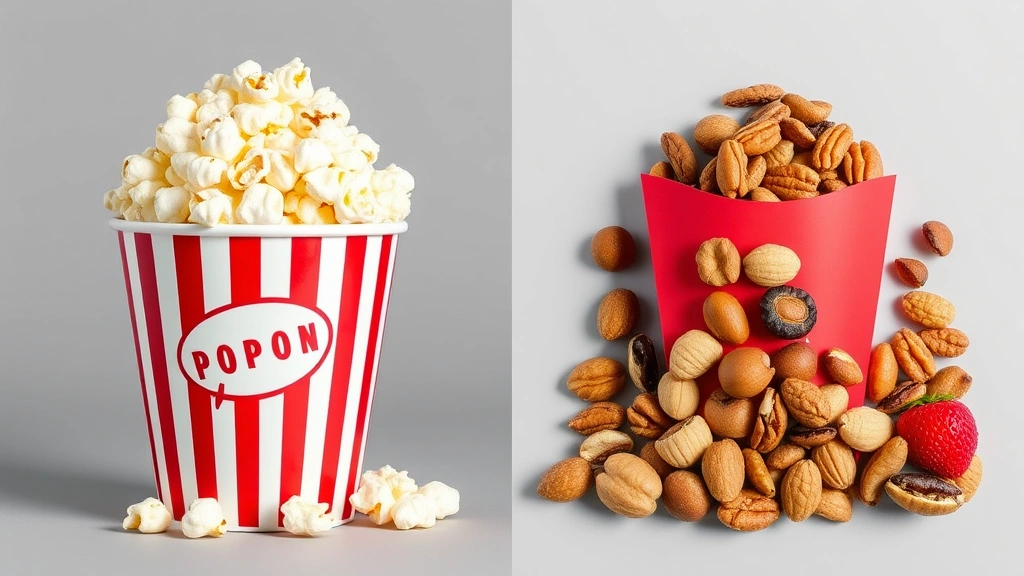
Nuts and Seeds: Mixed nuts or seeds provide protein, healthy fats, and fiber. A one-ounce serving (approximately 23 almonds) contains 160 calories but delivers 6 grams of protein and substantial micronutrient content. The satisfying nature of nuts means smaller portions provide satiety comparable to much larger popcorn servings.
Dried Fruit Combinations: Pairing dried fruit with nuts creates balanced snacks with carbohydrate, protein, and fat components. The natural sweetness satisfies cravings while providing fiber and micronutrients absent in processed snacks.
Dark Chocolate: A small portion of dark chocolate (70% cacao or higher) provides antioxidants and satisfying flavor. One ounce contains approximately 170 calories but delivers polyphenols with documented anti-inflammatory properties.
Whole Grain Crackers with Cheese: Whole grain crackers paired with cheese provide protein and whole grain carbohydrates. This combination supports blood sugar stability and provides sustained satiety throughout film viewing.
Making Better Choices at the Theater
Practical strategies for navigating movie theater snacking involve both choice architecture and behavioral modification. Understanding how nutrition impacts mental health and cognitive function reminds us that snacking choices extend beyond immediate satiety to affect mood, energy, and long-term wellbeing.
Investigate Theater Options: Many theaters now provide nutritional information upon request or through websites. Reviewing this information before arrival allows informed decision-making. Some chains offer smaller popcorn sizes, reduced-butter options, or alternative snacks that standard theater experience doesn’t highlight.
Timing Considerations: Consuming popcorn gradually throughout a film rather than rapidly at the beginning provides extended satisfaction. Eating slowly activates satiety hormones (leptin and peptide YY) more effectively, reducing total consumption by 15-25%.
Beverage Choices: Large fountain drinks accompanying popcorn add 200-400 calories from sugar. Choosing water or unsweetened beverages prevents additional caloric intake. This simple choice can reduce total snacking calories by 25-30%.
Social Accountability: Attending films with health-conscious companions increases likelihood of making better snacking choices. Social dynamics significantly influence eating behavior, with research demonstrating that individuals consume 25-35% less when eating with health-focused companions.
Frequency Considerations: Occasional movie theater visits permit more liberal snacking choices without significant health impacts. Individuals attending theaters weekly or more frequently should prioritize portion control and healthier alternatives more consistently.
The key insight for nutritionists working with clients involves reframing movie theater snacking as an occasional treat rather than a dietary staple. For someone visiting theaters monthly or less frequently, a large bucket of popcorn represents a manageable indulgence within balanced nutritional patterns. For frequent moviegoers, however, establishing portion control and alternative snacking habits becomes essential for long-term health outcomes.
FAQ
How many calories are in movie theater popcorn?
A large bucket contains approximately 1,200-1,500 calories before butter topping. Medium buckets contain 600-900 calories, while small portions provide 300-500 calories. These figures assume standard theater preparation with coconut oil.
Is movie theater popcorn unhealthy?
Movie theater popcorn is neither inherently unhealthy nor healthy—its impact depends on portion size, frequency of consumption, and overall dietary context. The whole grain base provides fiber and polyphenols, but preparation methods add substantial fat and sodium. Occasional consumption within controlled portions poses minimal health risk for most individuals.
Can I request unsalted popcorn at movie theaters?
Yes, most theaters will prepare unsalted popcorn upon request, though this option isn’t typically advertised. Unsalted popcorn reduces sodium content by approximately 40-50% without affecting caloric content. Requesting this option requires verbal communication with theater staff.
What’s the difference between coconut oil and other cooking oils for popcorn?
Coconut oil is approximately 90% saturated fat, while canola oil is approximately 7% saturated fat. Theaters traditionally use coconut oil for flavor and aroma characteristics. Some theaters now use blended oils (50% coconut, 50% canola) to reduce saturated fat content by approximately 25-30%.
Is popcorn a whole grain?
Yes, popcorn is a whole grain containing bran, germ, and endosperm. This means it provides dietary fiber, B vitamins, minerals, and polyphenols that refined grain snacks lack. The whole grain nature remains intact regardless of preparation method.
How can I enjoy movie popcorn while maintaining health goals?
Strategies include sharing small buckets, requesting light or no butter, eating before arriving, setting consumption limits, bringing air-popped popcorn, or choosing alternative snacks. Frequency of theater visits and overall dietary patterns should inform specific choices.
What’s the sodium content of movie popcorn?
A large bucket contains approximately 1,500-2,000 milligrams of sodium, representing 65-85% of daily recommended intake. This high sodium content poses particular concern for individuals with hypertension, diabetes, or cardiovascular disease risk factors.
Does popcorn have nutritional benefits despite theater preparation?
Despite added fats and sodium, popcorn retains whole grain benefits including fiber (15-20 grams per large bucket), polyphenols with antioxidant properties, and B vitamins. These benefits are present even in theater-prepared popcorn, though often overshadowed by excessive caloric density.


