Table of Contents
Introduction
Overwhelmed by all the conflicting weight loss advice out there? Trust me, you’re not alone. Between fad diets, calorie counting apps, and everyone’s “secret” weight loss trick, it’s no wonder so many people feel lost. But here’s something refreshing: there’s one straightforward approach that actually works long-term. Portion control. Simple? Yes. Easy? Well, that’s where things get interesting.
Think about it—when did restaurant portions become the size of dinner plates from the 1950s? (Spoiler alert: they didn’t used to be.) We’re surrounded by supersized everything, from movie theater popcorn to those “sharing” bags of chips that somehow become personal servings. No wonder portion control feels like swimming upstream. But here’s the thing about a healthy nutrition plan—it’s not about restriction. It’s about taking back control of your relationship with food, one sensible serving at a time.
Now, let’s talk about something most diet advice completely ignores: your brain. Ever notice how your mood affects what you eat? That afternoon slump that sends you straight to the vending machine isn’t just about hunger—it’s your brain chemistry at work. What you eat directly impacts how you think, feel, and make decisions (including future food choices). The connection between nutrition and mental health isn’t just fascinating science—it’s practical knowledge that can change your entire approach to eating.
Want to know a secret weapon for portion control? Fiber. Not the most exciting topic, I’ll admit, but stick with me here. Foods high in fiber don’t just fill you up—they keep you satisfied longer. That means fewer trips to the kitchen for “just a small snack” that turns into… well, you know how that story ends. When you understand the importance of dietary fiber, you’re basically getting a cheat code for feeling full on appropriate portions. And if you’re looking to mix things up, plant based protein sources offer incredible variety while supporting both satiety and muscle maintenance during weight loss.
Here’s where it gets really interesting—your metabolism. Some people seem to eat whatever they want without gaining weight (we all know that person), while others feel like they gain weight just looking at food. The good news? You can actually influence your metabolic rate. Small changes in what you eat and how you live can make a real difference in how to increase metabolism speed. And if you’re adding exercise to the mix (smart move), knowing about post workout recovery foods ensures you’re maximizing those efforts instead of sabotaging them.
Let’s zoom out for a second. Weight loss isn’t just about the number on the scale—it’s about feeling energized, confident, and healthy in your own skin. That’s where things like green tea come into play. Beyond its reputation as a weight loss helper, the benefits of drinking green tea extend to overall wellness in ways that might surprise you. Same goes for understanding the broader picture of how good nutrition affects every aspect of your life. The balanced diet benefits go far beyond weight management—we’re talking about energy levels, mood stability, and even how well you sleep.
Of course, portion control works even better when paired with movement. But before you start picturing hours on a treadmill, breathe easy. Smart fitness tips for weight loss focus on efficiency, not exhaustion. Maybe you’ve heard about intermittent fasting? It’s one approach that naturally leads to better portion awareness. If you’re curious, the guide on weight loss with intermittent fasting breaks down whether it might work for your lifestyle. And here’s something that might surprise you: weight loss and resistance training can be incredibly effective, even if you’ve never touched a weight before. Finally, let’s not forget the mental game. Stress eating is real, and the benefits of mindfulness meditation can be a game-changer for developing a healthier relationship with food.
What You’ll Learn in This Guide
Ready to master portion control without feeling deprived? This guide breaks down everything you need to know, from the science behind why it works to practical strategies you can start using today. No complicated rules or restrictive meal plans—just straightforward, actionable advice.
- Understanding Portion Control: We’ll clear up the confusion between portion control and restrictive dieting. You’ll learn why managing meal sizes (rather than severely cutting calories) creates sustainable habits that actually stick.
- Benefits of Portion Control: Discover why portion control goes beyond weight loss—improved digestion, better blood sugar control, and yes, even less guilt around food choices.
- Practical Techniques: Get hands-on strategies including visual cues, meal planning shortcuts, and mindful eating practices that make portion control feel natural, not forced.
- Overcoming Challenges: Learn how to handle real-world situations like restaurant meals, social gatherings, and emotional eating without throwing your progress out the window.
As we dive deeper, you’ll find practical insights backed by nutrition science—not just theory, but strategies that work in real life. We’ll also point you toward additional resources that complement portion control beautifully. For instance, if you’re athletic or just getting into fitness, the guide on nutrition for athletes shows how proper fueling enhances both performance and weight management goals.
Here’s what I love about portion control: it’s personal. Your ideal portions aren’t the same as your neighbor’s, and that’s perfectly fine. This guide addresses those individual differences and helps you figure out what works for your body, your schedule, and your preferences. We’ll also talk about when it might be helpful to get professional guidance—because sometimes having expert support makes all the difference.
Taking control of your portions is really about taking control of your health and confidence. Whether you want to lose weight, maintain where you are, or simply develop a more mindful relationship with food, portion control offers a solid foundation that doesn’t require perfect willpower or expensive supplements. Let’s explore how this simple concept can transform not just how you eat, but how you feel about eating. Your journey to sustainable, enjoyable weight management starts right here.
So we’ve talked about why portion control matters for weight loss—now let’s get into the real stuff. How do you actually make this work in your everyday life? Here’s the thing: portion control isn’t about starving yourself or obsessing over every bite. It’s about being smart with your food choices so you can still enjoy eating while keeping your calories in check. Think of it as your secret weapon against yo-yo dieting. Unlike those crazy restrictive diets that leave you hangry and dreaming about pizza, portion control is something you can actually stick with long-term. When you understand how portions affect your metabolism and how full you feel, you’ll start building eating habits that not only help you lose weight but make you feel better overall.
The Science and Benefits of Portion Control for Weight Loss
Here’s what portion control is really about: figuring out the right amount of food for each meal so you create that calorie deficit without feeling like you’re punishing yourself. This sweet spot is where the magic happens—you lose weight steadily without triggering those awful binge episodes that derail so many diets. Want to make this even easier? Pay attention to the importance of dietary fiber in your meals. Fiber is like your appetite’s best friend—it slows down digestion and keeps you satisfied longer, which makes sticking to reasonable portions feel natural rather than forced.
But wait, there’s more good news. When you get your portions right, your metabolism starts working more efficiently. No more overwhelming your digestive system with massive meals that leave you sluggish for hours. Instead, you’re giving your body just what it needs to absorb nutrients properly and maintain steady energy levels. Your blood sugar stays stable too, which means fewer of those crazy cravings that used to send you straight to the vending machine. This is especially important if you’re dealing with prediabetes or insulin resistance. To really nail this approach, check out low glycemic index foods—they work perfectly with portion control to keep your blood sugar happy and your weight loss on track.
Key Aspects of Portion Control Benefits
Why should you care about portion control? Because the benefits go way beyond just the number on the scale. We’re talking about real improvements to both your physical health and how you feel about food:
- Reduced risk of overeating: When you control your portions, you naturally eat fewer calories without that awful feeling of deprivation. No more post-meal food comas or that uncomfortable “I can’t believe I ate the whole thing” regret.
- Improved blood sugar regulation: Reasonable portions of carbs, especially when paired with fiber and protein, keep your glucose levels steady. Translation? No more energy crashes or sudden urges to raid the pantry.
- Supports heart health: Balanced portions mean you’re automatically cutting back on excess fats and sugars, which your heart will definitely thank you for. Better cholesterol levels and improved cardiovascular function are just nice bonuses.
- Increased mindfulness during meals: Focusing on portion sizes naturally slows you down while eating. You’ll start noticing when you’re actually hungry versus when you’re just bored, and you might even rediscover what food actually tastes like.
Once you start seeing these benefits, something shifts in your brain. Food stops being the enemy, and eating becomes this positive, controlled experience instead of an ongoing battle. The psychological wins—like losing that food guilt and feeling confident about your choices—are honestly just as important as the physical ones.
Practical Strategies to Implement Portion Control Successfully
Okay, enough theory—let’s talk about making this work in real life. The key is having practical techniques that fit into your actual routine, not some perfect Pinterest-worthy lifestyle. Start with simple visual cues to estimate portions. No need to carry a food scale everywhere (though if that’s your thing, go for it). Use plates that aren’t the size of serving platters, and try pre-portioning your meals when possible. This prevents that “oops, how did I eat the entire bag of chips?” situation. If you want to level up your approach, learn about plant-based protein sources—they’re incredibly satisfying and nutrient-dense, perfect for keeping you full and happy within your portioned meals.
Meal planning is your secret weapon here. When you prep your meals and snacks in advance with proper portions, you eliminate all that decision-making when you’re hungry and tired. (Because let’s be honest, hangry you makes terrible food choices.) Store everything in grab-and-go containers, and you’ve just made healthy eating automatic. Pair this with regular fitness routines and you’ve got a winning combination—you’re balancing what goes in with what gets burned, boosting your metabolism, and keeping your muscle mass while you lose weight.
Key Techniques for Portion Control Practice
Ready to put this into action? These strategies are designed to work with your busy life, not against it:
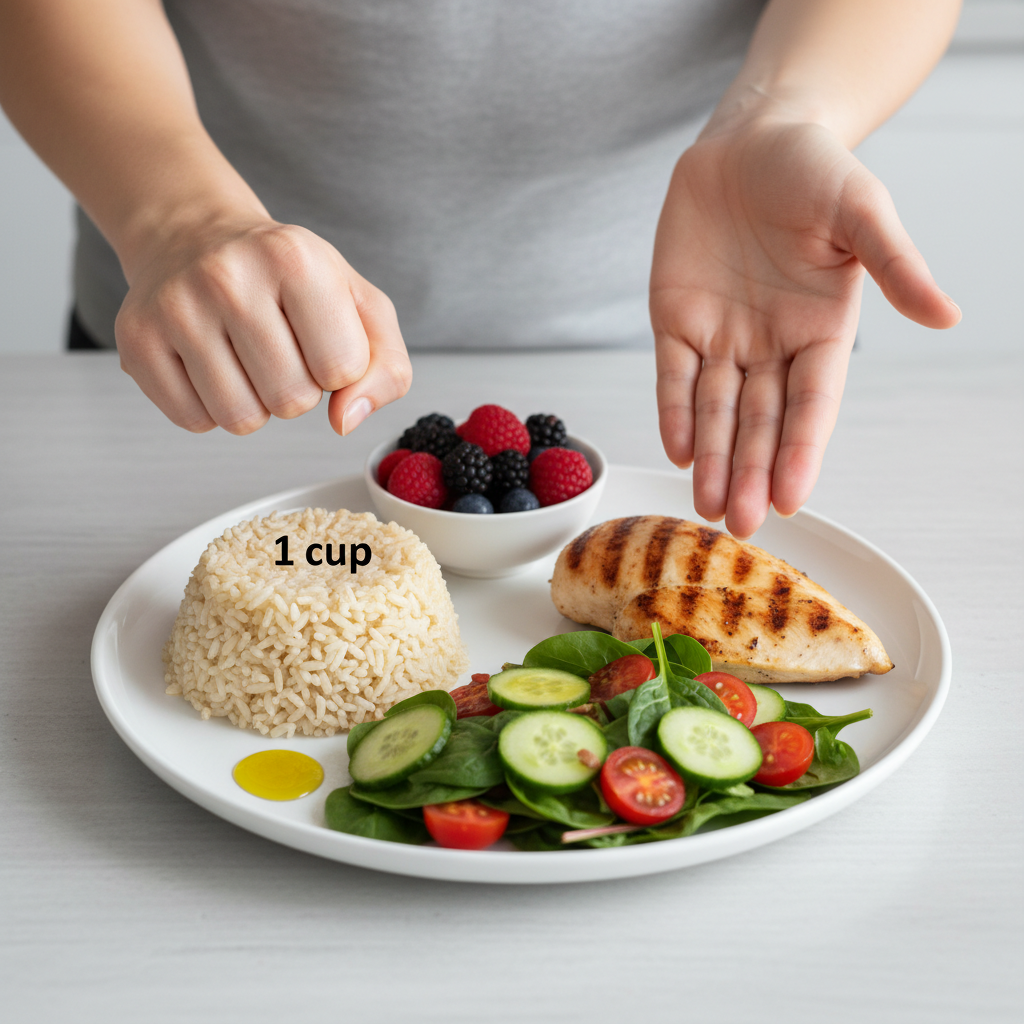
- Using visual cues: Your hand is the perfect portable measuring tool. A fist equals a serving of vegetables, your palm is perfect for protein portions. No math required, and it’s always with you whether you’re at home or eating out.
- Meal planning and prep: Spend a little time on the weekend preparing portioned meals for the week. Get containers that make this easy, and future you will be so grateful when dinner is just a microwave away.
- Mindful eating habits: Put your fork down between bites. Turn off the TV. Actually taste your food. It sounds simple, but slowing down helps you notice when you’re satisfied instead of mindlessly eating until the plate is empty.
- Listening to hunger signals: Your body is smarter than you think. Learn to distinguish between actual hunger and eating out of habit, boredom, or stress. Eat when you’re hungry, stop when you’re satisfied—not stuffed.

Here’s the thing about portion control—it really works. And not in that “suffer through tiny meals” way that makes you miserable. We’re talking about a smarter approach that lets you actually enjoy your food while still losing weight steadily. Think of it as your metabolism’s best friend. When you eat the right amounts, your blood sugar stays balanced, your energy doesn’t crash, and your body naturally burns calories more efficiently. Plus, you’ll dodge those uncomfortable post-meal crashes that come from overdoing it.
But wait—there’s something even better happening here that most people miss. Portion control isn’t just about the physical stuff (though that’s great too). It’s like training your brain to actually pay attention during meals. You start noticing when you’re genuinely hungry versus when you’re just bored or stressed. That guilt you feel after eating? It starts melting away because you’re making intentional choices instead of mindless ones. Simple tricks like using your hand to estimate serving sizes or prepping meals ahead of time become second nature. And here’s what’s really cool—you get better at handling those tricky situations, like office pizza parties or emotional eating moments.
Ready to make this work in real life? Start by building a solid healthy nutrition plan that you actually want to stick with. Load up on dietary fiber—it’s like having a natural “I’m full” signal that your body can’t ignore. Don’t forget about plant-based protein sources either. They’ll keep you satisfied longer and help maintain those hard-earned muscles. Meal prep becomes your secret weapon against impulsive overeating, and learning to eat slower? Game changer. Your body needs about 20 minutes to realize it’s full, so give it time. And speaking of being prepared for life’s curveballs, it’s smart to think about your financial wellness too—like learning how to build an emergency fund. Because when you’re financially stressed, you’re more likely to stress eat.
Let’s be real—portion control isn’t some magic bullet that works overnight. It’s more like building a friendship with food that actually lasts. You’re not just changing what you eat; you’re changing how you think about eating. If you’re really serious about optimizing your nutrition (maybe you’re training for something or just want to take things up a notch), check out our guide on nutrition for athletes. It’s packed with insights that go way beyond basic portion control. The bottom line? This approach works because it’s actually doable. You’re not fighting against your body—you’re working with it. And that makes all the difference.
Frequently Asked Questions
-
What is the difference between portion control and calorie counting?
- Portion control focuses on managing the quantity of food eaten to create sustainable habits, while calorie counting involves tracking the energy intake precisely. Portion control often feels less restrictive and more intuitive.
-
Can portion control work for everyone?
- Yes, portion control can be effective for most people, but its success depends on individual needs and preferences. It’s best combined with other healthy habits like balanced nutrition and regular physical activity.
-
How can I avoid feeling hungry while practicing portion control?
- Choosing nutrient-dense foods rich in fiber and protein helps enhance satiety. Eating mindfully and drinking plenty of water also support fullness and reduce unnecessary snacking.
-
Is it necessary to use measuring tools for portion control?
- Measuring tools like scales and cups are helpful but not mandatory. Visual cues, such as using hand sizes or plate portions, paired with mindful eating can be very effective and more practical daily.
-
When should I consult a healthcare professional about weight loss?
- If you find portion control alone insufficient for weight loss or have underlying health conditions affecting your journey, seeking advice from a healthcare professional ensures you get personalized, safe support.