
Krispy Kreme Donut Nutrition: Dietitian Insights on Glazed Favorites
Krispy Kreme glazed donuts have become an iconic American indulgence, beloved for their light, fluffy texture and signature sweet glaze. Yet for health-conscious consumers, understanding the nutritional composition of these treats is essential for making informed dietary choices. This comprehensive analysis examines the nutritional value of Krispy Kreme glazed donuts through a dietitian’s lens, breaking down calories, macronutrients, micronutrients, and practical strategies for enjoying these pastries within a balanced lifestyle.
The glazed donut represents a fascinating case study in processed food nutrition. While undeniably high in sugar and calories, these donuts contain surprising nutritional elements worth discussing. Whether you’re a devoted fan seeking to understand your favorite treat or someone curious about the science behind popular foods, this guide provides evidence-based insights from registered dietitian perspectives on how glazed donuts fit into modern dietary patterns.
Complete Nutritional Breakdown of Glazed Donuts
A standard Krispy Kreme glazed donut (the Original Glazed) contains approximately 190 calories, making it a relatively moderate-calorie treat compared to many other bakery items. However, the caloric density becomes more significant when consumption patterns are considered—many people consume multiple donuts in a single sitting, which can quickly escalate total intake.
The nutritional profile includes:
- Total Fat: 10 grams (13% of daily value based on 2,000 calorie diet)
- Saturated Fat: 5 grams (25% of daily value)
- Trans Fat: 0 grams
- Cholesterol: 5 milligrams
- Sodium: 200 milligrams (8% of daily value)
- Total Carbohydrates: 22 grams (8% of daily value)
- Dietary Fiber: 0 grams
- Sugars: 12 grams
- Protein: 2 grams
This breakdown reveals a food product engineered for palatability rather than nutritional density. The absence of dietary fiber, combined with high sugar content relative to protein, means glazed donuts provide minimal satiety and can contribute to blood sugar spikes. According to research from the Pew Research Center, understanding food composition has become increasingly important as Americans navigate complex dietary landscapes.
Caloric Content and Energy Density
Energy density—the number of calories per gram of food—is a critical concept for understanding how glazed donuts impact overall caloric intake. With approximately 3.2 calories per gram, glazed donuts fall into the high energy-density category. This means a small portion delivers substantial calories, contributing to what dietitians call “caloric creep,” where seemingly modest treats accumulate to significant daily totals.
For perspective, a glazed donut contains similar calories to a medium apple (95 calories) plus a tablespoon of almond butter (95 calories), yet the donut lacks the fiber, micronutrients, and satiety-promoting properties of the latter combination. This comparison illustrates why registered dietitians often recommend reconsidering portion sizes and frequency of donut consumption.
The healthy nutrition plan approach emphasizes food quality alongside quantity. A 190-calorie donut might fit within daily caloric targets, but it displaces opportunities to consume nutrient-dense alternatives that support long-term health outcomes.
Sugar Content: The Primary Concern
The 12 grams of sugar in a single glazed donut represents the most significant nutritional concern from a dietitian perspective. The American Heart Association recommends daily added sugar limits of 25 grams for women and 36 grams for men. One donut consumes nearly half the recommended daily limit for women, before accounting for sugars in other foods and beverages.
What makes this particularly problematic is the type of sugar delivery. The glazed donut provides rapidly absorbed simple carbohydrates without accompanying fiber, protein, or fat to moderate blood glucose response. This creates a sharp glycemic spike followed by an equally sharp crash, potentially triggering increased hunger and fatigue within hours.
For individuals with prediabetes, diabetes, or metabolic concerns, this glycemic impact carries special significance. Research published in medical journals demonstrates that frequent consumption of high-sugar, low-fiber foods significantly correlates with increased type 2 diabetes risk and cardiovascular disease markers. The National Institutes of Health maintains comprehensive databases on nutritional epidemiology supporting these associations.
Understanding your current dietary pattern through tools like the nutrition label generator helps contextualize individual food choices within overall consumption patterns.
Fat Profile and Dietary Implications
Glazed donuts derive their characteristic texture and flavor from 10 grams of total fat per serving. The concerning aspect involves the saturated fat content: 5 grams represents 25% of the daily recommended intake. While not extreme, regular donut consumption can contribute meaningfully to saturated fat totals, particularly for individuals following lower-fat dietary approaches or managing cardiovascular risk factors.
Importantly, Krispy Kreme donuts contain zero grams of trans fat, representing an improvement from historical donut formulations that relied on partially hydrogenated oils. However, the saturated fat content still warrants consideration for those monitoring cholesterol levels or following heart-healthy dietary patterns.
The fat in donuts serves functional purposes beyond flavor—it contributes to mouthfeel and helps stabilize the glaze. From a purely nutritional standpoint, however, these fats come without the anti-inflammatory compounds found in plant-based fat sources like nuts, seeds, or avocados. This represents a key distinction: not all 5-gram saturated fat servings carry equal nutritional weight.
Micronutrients and Fortification
Glazed donuts contain minimal micronutrients in meaningful quantities. A single donut provides negligible amounts of vitamins and minerals relative to daily requirements. There is no vitamin C, minimal B vitamins, and trace amounts of iron and calcium—amounts far below what would meaningfully contribute to daily nutritional needs.
This absence of micronutrient density is particularly significant when considering that many people consume donuts during breakfast—a meal opportunity to establish nutritional foundation for the day. Pairing a donut with nutrient-dense breakfast components becomes essential for those unwilling to eliminate the treat entirely.
The nutrition care process emphasizes individualized approaches recognizing that dietary perfection is neither realistic nor necessary. Rather, strategic combinations and proportional thinking allow people to include preferred foods while maintaining overall nutritional adequacy.
Comparing Glazed Donuts to Other Breakfast Options
Context matters significantly in nutritional assessment. How does a glazed donut compare to typical breakfast alternatives?
Versus a Bagel with Cream Cheese: A plain bagel with 2 tablespoons cream cheese contains approximately 320 calories, 8 grams fat, and 6 grams protein. While higher in calories, the bagel offers more sustained energy through greater carbohydrate volume and slightly more protein for satiety.
Versus Oatmeal with Berries: A half-cup of dry oatmeal prepared with water plus half-cup fresh berries totals roughly 200 calories but provides 4 grams of fiber and substantially more micronutrients. The fiber dramatically improves satiety and blood glucose response.
Versus a Muffin: Standard bakery muffins often contain 300-450 calories with comparable or greater sugar content than donuts. In this comparison, the glazed donut actually emerges more favorably from a caloric perspective.
Versus a Granola Bar: Many commercial granola bars match or exceed donut calories while marketing themselves as “healthy.” A glazed donut might actually represent a more transparent choice nutritionally.
These comparisons illustrate why dietitians resist absolute food demonization. Rather than asking “Is a glazed donut bad?” the more productive question becomes “How does this food fit within my overall dietary pattern and personal goals?”
Portion Control Strategies
For those choosing to include glazed donuts in their diet, strategic portion approaches minimize negative impact while preserving enjoyment:
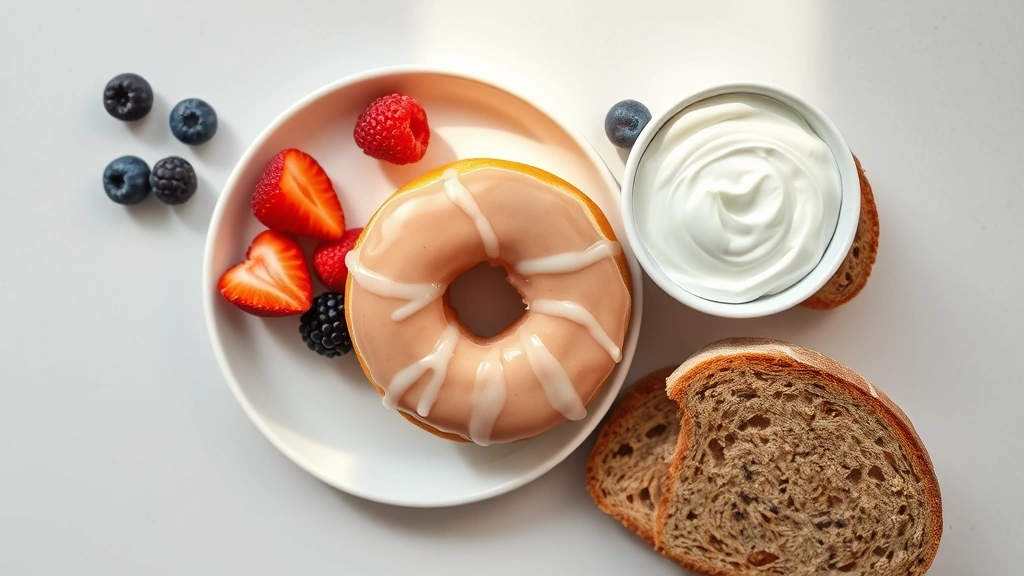
- The Half-Donut Strategy: Consuming half a donut (approximately 95 calories, 6 grams sugar) alongside protein and fiber sources (like Greek yogurt and berries) creates a more balanced breakfast composition.
- The Frequency Boundary: Establishing a specific frequency limit—such as “donuts on Friday mornings only”—creates structure preventing unconscious overconsumption. Research on habit formation suggests consistent timing strengthens boundary adherence.
- The Pairing Method: Never consuming a donut alone. Always pair with protein (eggs, yogurt, cottage cheese) and/or fiber (whole grain toast, fruit, vegetables) to moderate glycemic response and extend satiety.
- The Mindful Consumption Approach: Eating slowly, without distraction, enhances satisfaction from smaller portions. Studies demonstrate that distracted eating (while working or watching screens) significantly increases total consumption.
- The Smaller Size Selection: Krispy Kreme offers mini donuts containing approximately 50-60 calories. Consuming 2-3 minis (100-180 calories) can satisfy the craving with greater nutritional flexibility.
Frequency and Frequency Guidelines
Registered dietitians recognize that dietary sustainability matters more than theoretical perfection. Rather than categorical prohibition, frequency-based guidelines provide practical frameworks:
For General Health: Occasional consumption (1-2 times monthly) poses minimal health risk for individuals without metabolic concerns. The key distinction involves “occasional” versus “habitual” consumption patterns.
For Weight Management: Those actively losing weight benefit from treating glazed donuts as occasional indulgences (perhaps monthly) rather than weekly treats. The 190 calories, while modest individually, accumulates meaningfully across weeks when consumed regularly.
For Metabolic Conditions: Individuals with diabetes, prediabetes, or metabolic syndrome should approach glazed donuts more cautiously. If included, pairing with protein and fat, consuming in smaller portions, and maintaining lower frequency becomes important for blood glucose management.
For Athletes: The nutrition for athletes approach recognizes that those with high energy expenditure can accommodate higher-calorie foods more easily. An athlete might reasonably include donuts more frequently than sedentary individuals, though timing (post-workout for rapid carbohydrate replenishment) matters for performance optimization.
The Nutrients Pathway Blog regularly explores how individual circumstances shape dietary recommendations, acknowledging that universal prescriptions rarely serve diverse populations effectively.
Ultimately, frequency guidelines should align with personal health objectives, medical history, and lifestyle factors. A 60-year-old with hypertension and prediabetes faces different considerations than a 25-year-old athlete. Personalization, not universalization, represents best-practice nutrition counseling.

FAQ
How many calories are in a Krispy Kreme glazed donut?
A standard Original Glazed donut from Krispy Kreme contains 190 calories. This represents a moderate calorie load for a single food item, though the caloric density (calories per gram) is relatively high, meaning small portions deliver substantial energy.
Is the sugar content concerning for regular consumers?
Yes, the 12 grams of added sugar in a single donut is significant. For daily added sugar limits (25 grams for women, 36 for men per American Heart Association), one donut consumes 30-48% of the recommendation. Regular consumption, especially combined with sugars from other sources, can meaningfully impact metabolic health.
Can glazed donuts fit into a weight loss plan?
Glazed donuts can technically fit within caloric targets for weight loss, but their low nutrient density and minimal satiety-promoting properties make them suboptimal choices for most weight loss approaches. The 190 calories might displace more nutritious alternatives that provide greater satiety and nutritional benefit. Occasional consumption is more realistic than regular inclusion.
What’s the protein content and why does it matter?
Glazed donuts contain only 2 grams of protein per serving. Protein promotes satiety, helps regulate blood glucose response, and supports muscle maintenance. The minimal protein content means donuts alone don’t provide sustained energy, making strategic pairing with protein sources important.
How does the saturated fat in donuts compare to dietary guidelines?
At 5 grams saturated fat per donut (25% of daily recommended intake), occasional consumption poses minimal concern. However, regular donut consumption combined with other saturated fat sources can meaningfully impact total intake. Those with cardiovascular concerns should monitor cumulative saturated fat consumption across all foods.
Are mini donuts a healthier alternative?
Mini donuts contain proportionally similar nutrition per gram, with approximately 50-60 calories each. Consuming 2-3 minis (100-180 calories) provides similar satisfaction to a full donut for some people, potentially with greater nutritional flexibility for pairing with other foods. However, the nutritional profile remains essentially unchanged—just in smaller portions.
What’s the fiber content and why is it absent?
Glazed donuts contain zero grams of dietary fiber. The refined wheat flour used lacks the bran and germ where fiber naturally occurs. This absence contributes to rapid glucose absorption and minimal satiety benefits. Pairing donuts with high-fiber foods becomes important for those seeking metabolic stability.
How should people with diabetes approach glazed donuts?
Individuals with diabetes should treat glazed donuts cautiously due to high sugar content and rapid glucose absorption. If included, strategic approaches include: consuming smaller portions, pairing with protein and fat to moderate glycemic response, timing consumption with physical activity, and monitoring blood glucose response individually. Consulting healthcare providers about personal guidelines is important.
Can glazed donuts be part of a healthy diet?
Yes, glazed donuts can be part of an overall healthy diet for most people when consumed occasionally and strategically. The key involves frequency (infrequent rather than habitual), portion size (often smaller than standard servings), and pairing strategies (with protein and fiber sources). Dietary sustainability matters more than perfection, and complete food restriction often backfires psychologically.
What’s the best time to eat a glazed donut?
Timing considerations include: consuming with other foods (never alone) to moderate blood glucose response, potentially post-workout when carbohydrates are being actively utilized, or earlier in the day when additional calories can be accommodated within daily totals. Avoiding consumption on an empty stomach minimizes glycemic spikes and subsequent energy crashes.


